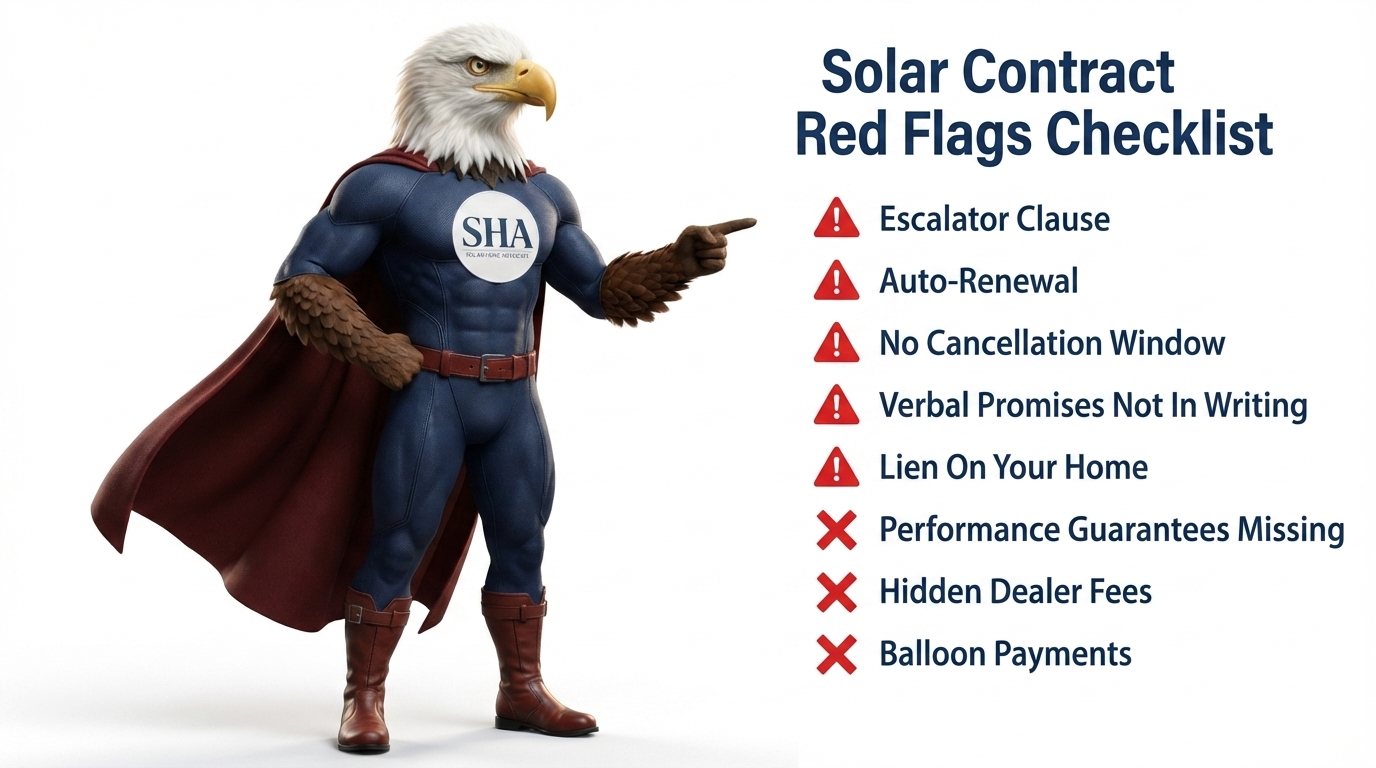
Solar Contract Red Flags: A Checklist For You and Your Family
Not every solar contract is a bad deal. But a lot of them have things in them that your solar salesperson didn't take the time to properly explain. Some of these things can cost you thousands of dollars, or block you from selling your home.
Here's a quick checklist. If three or more of these are in your contract, it may be worth having someone take a closer look.
The Checklist: Does Any Of The Following Apply To You?
Red flags 1-7 apply to solar leases and PPAs. Red flags 8-10 apply to solar loans. Red flag 11 applies to everyone.
1. Escalator Clause
Your payment goes up every year by a set percentage, usually around 2.9%. Over 25 years, this can nearly double your monthly bill. Most homeowners aren't told about it when they sign. (See our full escalator clause guide for the math.)
2. UCC-1 Fixture Filing (Lien on Your Home)
Some solar companies file a UCC-1 fixture filing on your property. This is essentially a lien. It tells anyone looking at your property title that the solar company has a financial interest in equipment attached to your home. This can block or delay a home sale, scare off buyers, and create problems with title insurance.
3. Auto-Renewal Terms
Some contracts automatically renew for additional years at the end of the initial term unless you cancel within a narrow window, sometimes as short as 30 to 90 days. Miss that window and you could be locked in again.
4. Transfer Restrictions
If you try to sell your home, the buyer may have to qualify to take over your solar lease or PPA. If they don't qualify, or simply don't want to, you may have to pay off the entire remaining contract balance just to close the sale. Buyouts typically range from $7,000 to $30,000 or more depending on system size and remaining term.
5. Performance Guarantees That Don't Match Reality
Your contract may guarantee a certain amount of energy production. But if the system was oversized, improperly installed, or the production estimates were inflated by the salesperson, actual output can fall well short. Some contracts have a "make-good" clause. Many don't. And if your installer has gone bankrupt, there's nobody left to make it right.
6. Cancellation Penalties
Some contracts charge a fee if you try to cancel early. Sometimes thousands of dollars. Others have no early cancellation option at all. If you weren't told about the cancellation terms when you signed, that changes what you can do about it.
7. Missing or Vague Savings Projections
If the salesperson promised specific dollar savings and those numbers aren't in the contract, there's no way to hold anyone to them. Verbal promises don't survive the signature page. If it's not in writing, it doesn't exist.
8. Hidden Dealer Fees in Your Loan
If you financed your solar system with a loan, there may be thousands of dollars in dealer fees rolled into your loan balance that were never clearly explained to you. These fees are paid to the installer by the lender and added to what you owe. But many homeowners are never told about them. If these fees weren't properly disclosed, that's a potential Truth in Lending Act (TILA) violation. (See our solar loan violations guide.)
9. Your Total Loan Cost Doesn't Match What You Were Told
Add up your monthly payment times the number of months on your loan. Is that number close to what the salesperson told you the system would cost? For many homeowners, the total is thousands more than what they were quoted. Sometimes tens of thousands. If the total cost of financing was misrepresented, that's another potential TILA issue.
10. You're Paying a Solar Loan AND a High Utility Bill
This is the one that catches most homeowners off guard. You were told solar would eliminate or dramatically reduce your electricity bill. Instead, you're paying a monthly solar loan payment AND a utility bill that's barely changed. If the savings projections you were sold don't match reality, the way the deal was presented to you may not have been accurate.
11. System Ownership Confusion
Do you own the panels or does the solar company? This is the most basic question and a surprising number of homeowners don't know the answer. If you signed a lease or PPA, the company owns the equipment on your roof. If you took a loan, you own it. This changes everything about your rights and options. (See our lease vs. PPA vs. loan guide.)
How to use this checklist
Pull out your contract. Go through it section by section. If you can identify three or more of the red flags above, your contract deserves a closer look by someone who does this professionally.
Can't find the answers?
Not sure what all the legal language actually means?
That's normal. Solar contracts are long and written in language most people aren't meant to fully understand. That's what a Free Assessment is for.
How Many Red Flags Are In Your Contract?
If you checked three or more boxes above, or couldn't find the answers in your contract at all, the next step is talking to a senior consultant who reads these contracts for a living and can tell you what relief you may qualify for.
Free Assessment
Talk to a senior consultant who can review your contract and tell you what relief you may qualify for.
No cost. No obligation. No pressure.

Sal Says
"The average homeowner we hear from has 3 to 5 of these red flags in their contract. Most didn't know about any of them until they looked."